
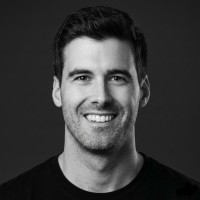
I started VantaFive after building and selling Orca Pacific. The agency venture studio carries forward what I learned: find an emerging customer need, develop specialist expertise, and build systems beyond the founder.
2008: start with a problem worth solving
I was 23, without a clear career path, when I started selling Amazon consulting. Orca Pacific began with a straightforward proposition: help companies navigate a channel they did not yet understand. I was one of the early Amazon agency founders, at a time when the competitive field was small enough to recognize almost everyone in it.
There was no fully formed venture studio thesis behind that first step. There was a customer problem and a willingness to work on it. The business developed from there.
2012: an agency takes shape
Four years later, Orca Pacific had grown into a seven-figure agency with about a dozen employees. The business had moved well beyond an individual consulting practice, but the operating model still had room to mature.
That is an important stage in an agency’s life. Demand can carry a company surprisingly far. Eventually, however, a growing customer base requires more than the founder’s ability to sell and solve problems.
2016: the market changes
As larger companies became serious about Amazon, competitors appeared more frequently. The early opening was no longer enough on its own. I decided to build a more complete business, with a dedicated go-to-market operation and a stronger back office.
That decision shifted the focus from simply serving the next client to building the systems that could support many more of them. It was an operating change as much as a growth decision. The agency needed a repeatable way to acquire clients and deliver work at a higher level of complexity.
2020: the exit
After four years of focused building, Orca Pacific had reached eight figures and around a hundred people. The acceleration in e-commerce during COVID added momentum. Multiple acquisition approaches followed, and in 2020 I sold Orca Pacific to S4 Capital.
I stayed through the integration and earnout, including a role leading commerce globally. The experience offered a different perspective on how service businesses operate inside a much larger organization.
The next chapter: a studio for specialist agencies
After stepping away, I thought I was finished working. Retirement did not hold my attention. In 2024, I started VantaFive, a self-funded venture studio built around launching agencies. The VantaFive manifesto explains the model: specialist operators supported by shared systems for growth and delivery.
The second chapter carries forward the most useful lessons from the first: find a meaningful market opening, build deep expertise, and turn that expertise into systems that can outlast the founder’s direct involvement.
Today’s portfolio spans several different disciplines. The common thread is the same: a specialist operator, a clear customer need, and a business designed to keep improving as its market changes. The current portfolio reflects the latest company lineup.
Three things to remember.
- An emerging channel can create an opening for scarce expertise.
- Growth eventually requires systems beyond the founder’s personal capacity.
- Experience from one agency can inform a studio without making every company identical.
About this article
Adapted and expanded from “2008: I was 23 with no clear career path…” on LinkedIn ↗, originally shared by John Ghiorso on . The Journal edition was first published on September 8, 2026.
More about John Ghiorso →